
Reception: Friday, Feb 20ᵗʰ 2026
Invite Only, RSVP
GOLD RUSH
JENS KAEUMLE
ATLANTA
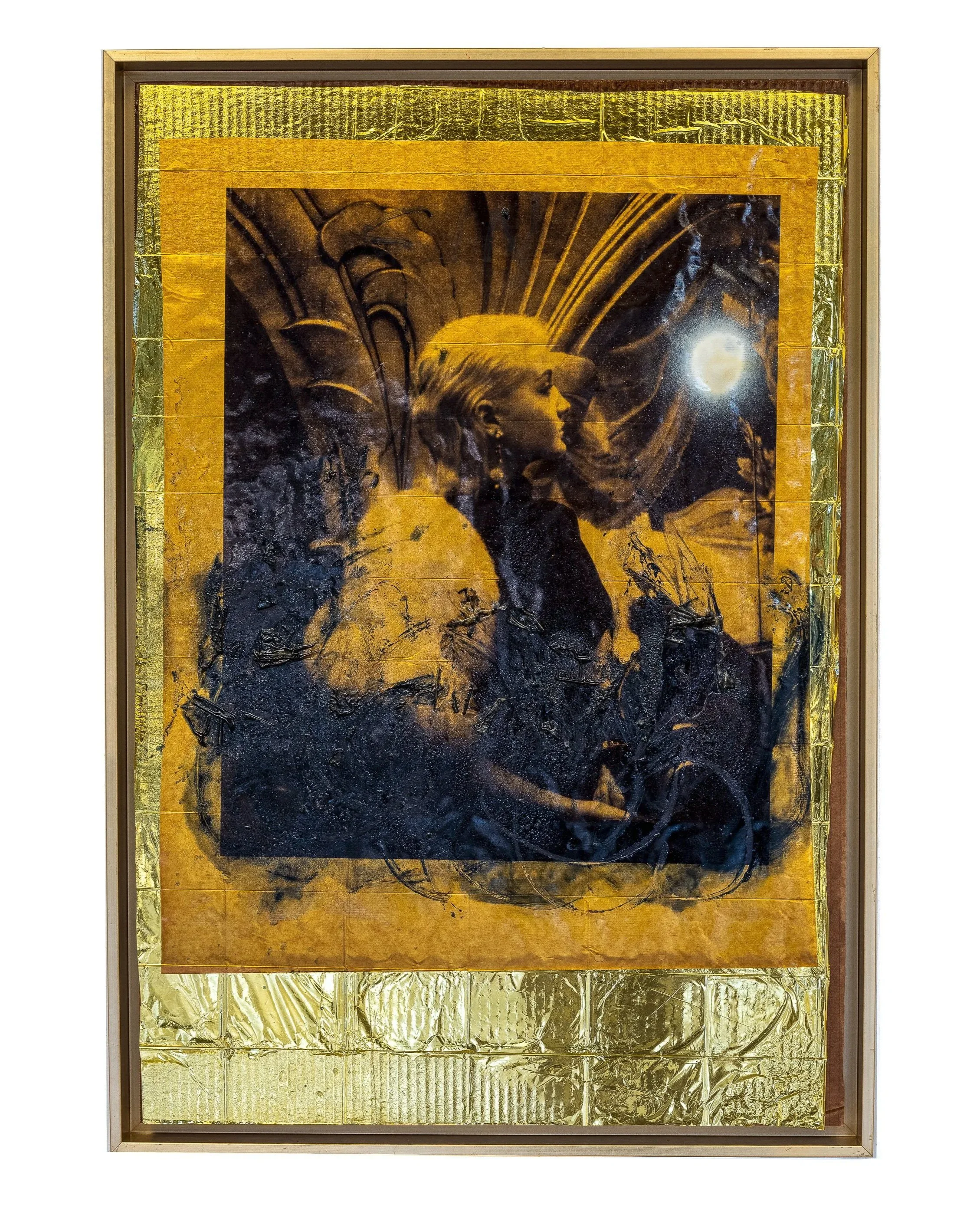
Young Beauty, 2021 Oil paint, linseed oil, gold foil, kraft paper, cardboard 24" x 37” inches (61 x 94 cm)
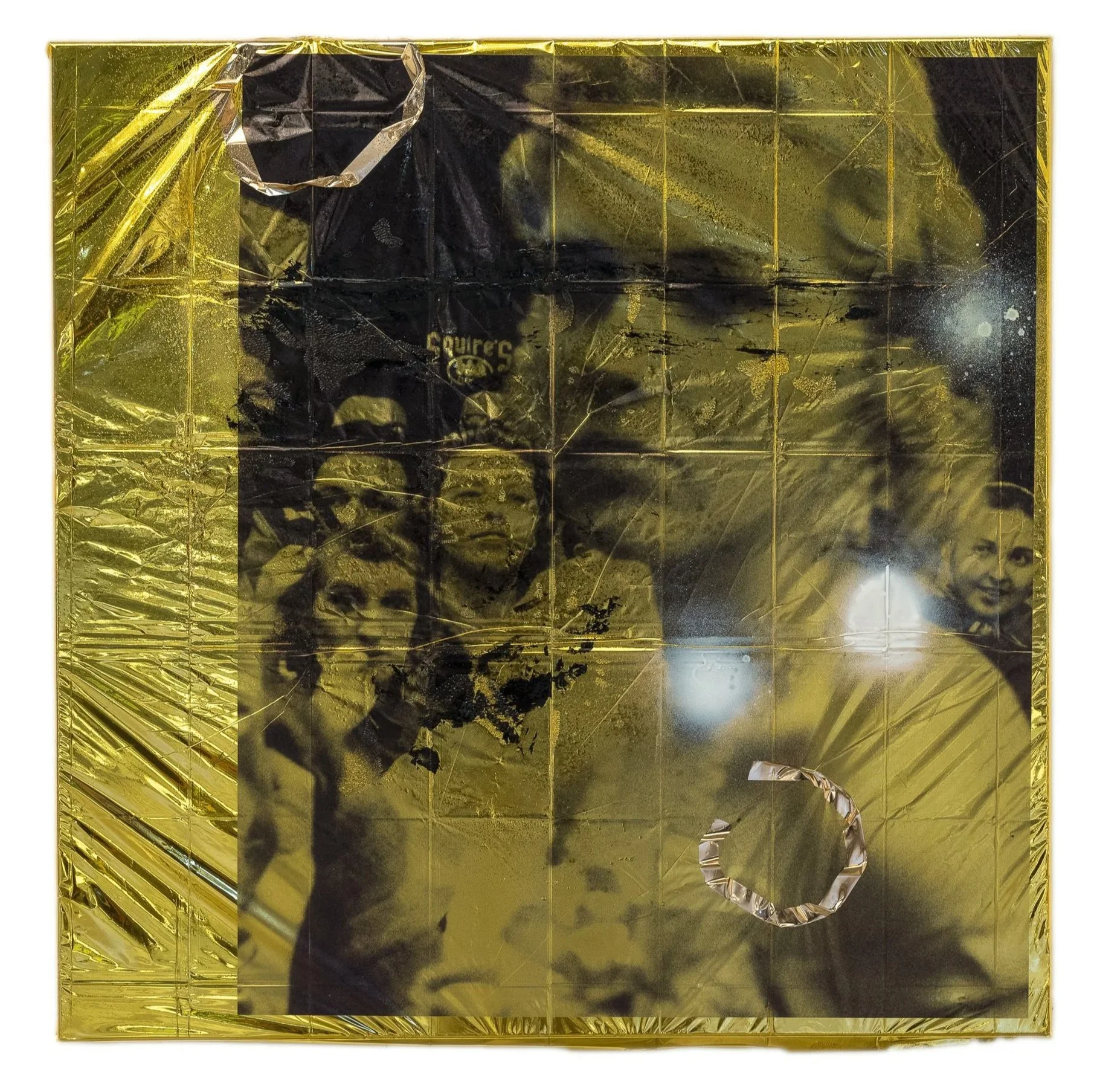
The Startlet, 2021 Oil paint, linseed oil, gold foil, kraft paper, cardboard 24” x 24” inches (61 x 61cm)
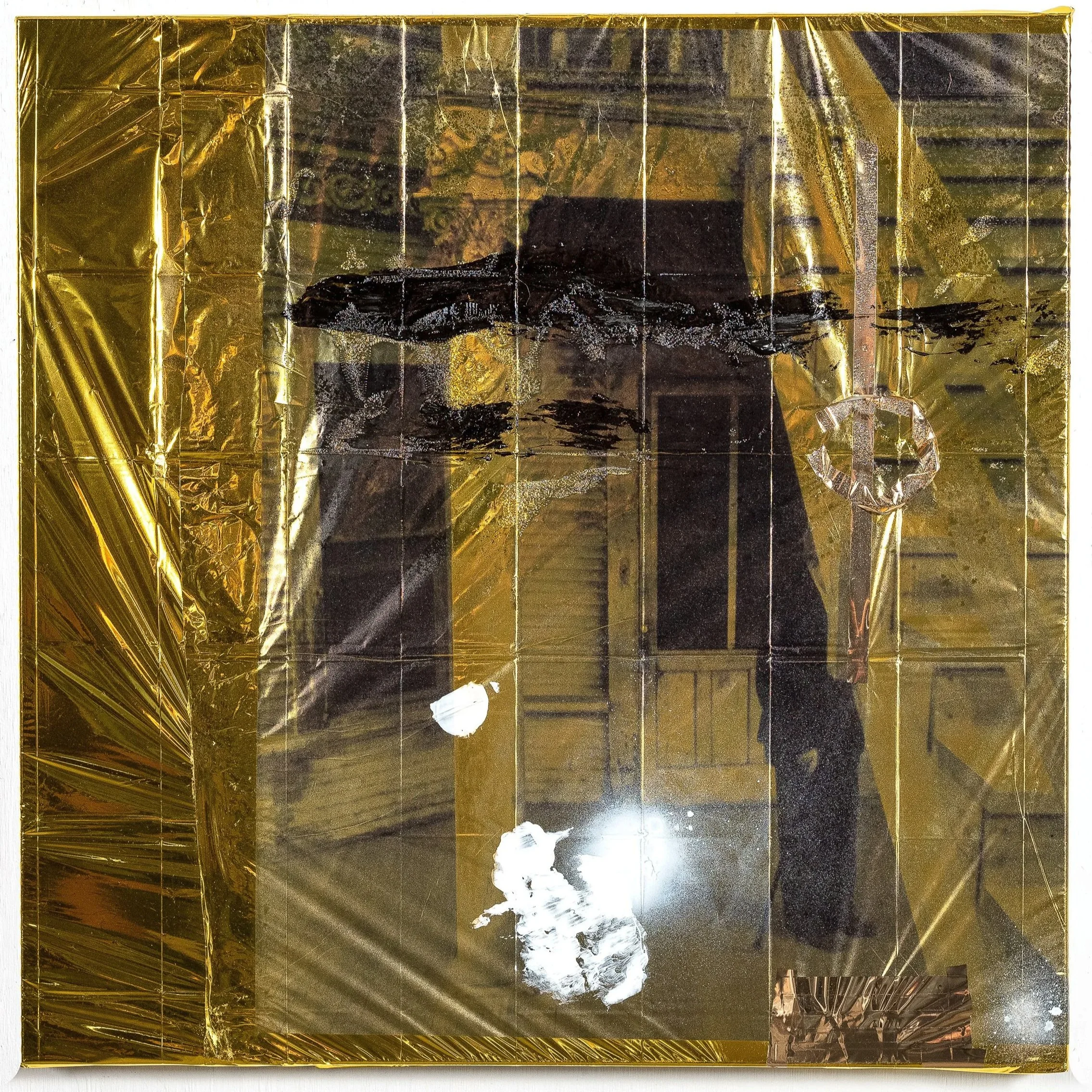
Old man and stairs, 2021 Oil paint, linseed oil, gold foil, kraft paper, cardboard 24” x 24” inches (61 x 61cm)
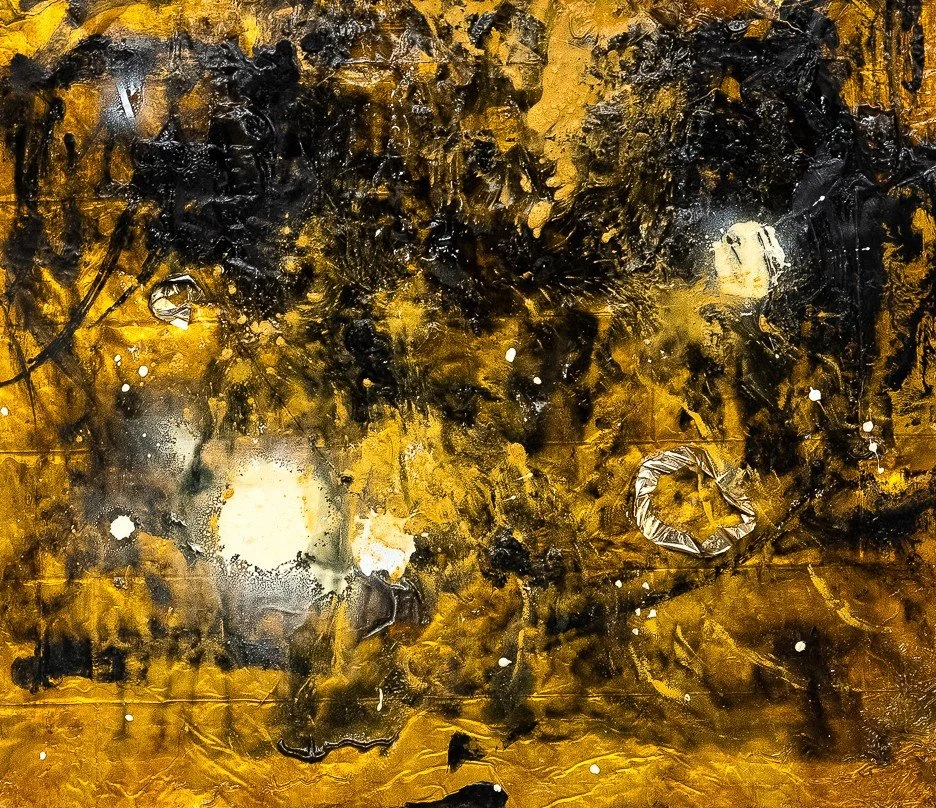
Headlight in the dark 1, 2020 Cardboard, gold foil, kraft paper, oil paint, linseed oil 22” x 18” inches (55.9 x 45.7 cm)
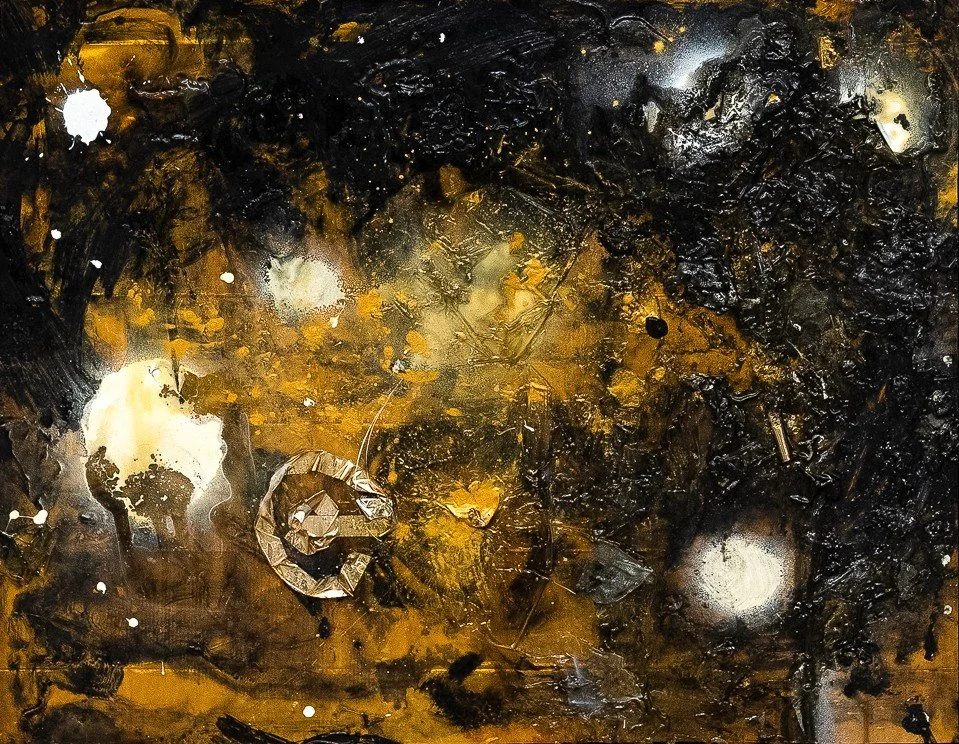
Headlight in the dark 2, 2020 Cardboard, gold foil, kraft paper, oil paint, linseed oil 22” x 18” inches (55.9 x 45.7 cm)
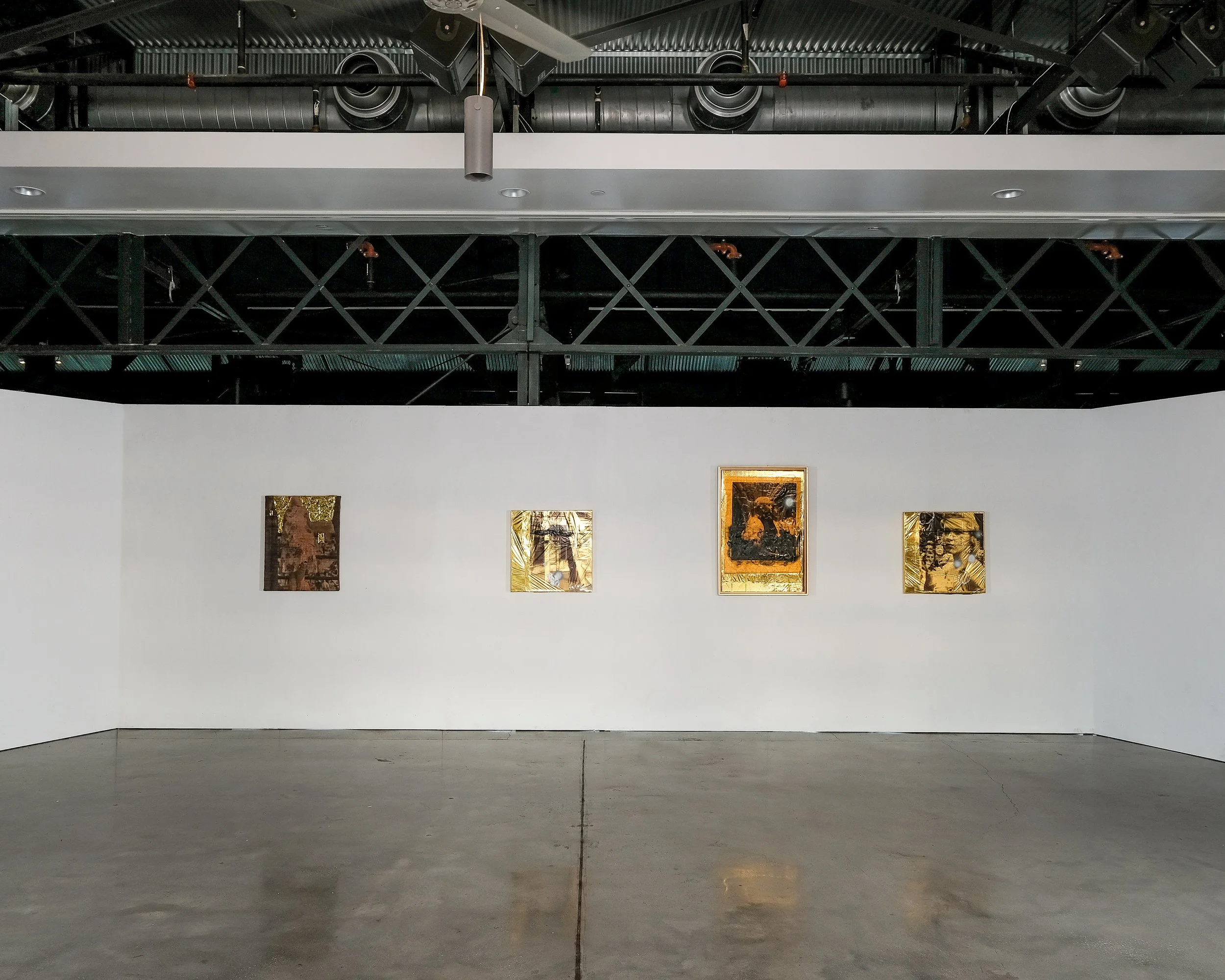
Exhibition view
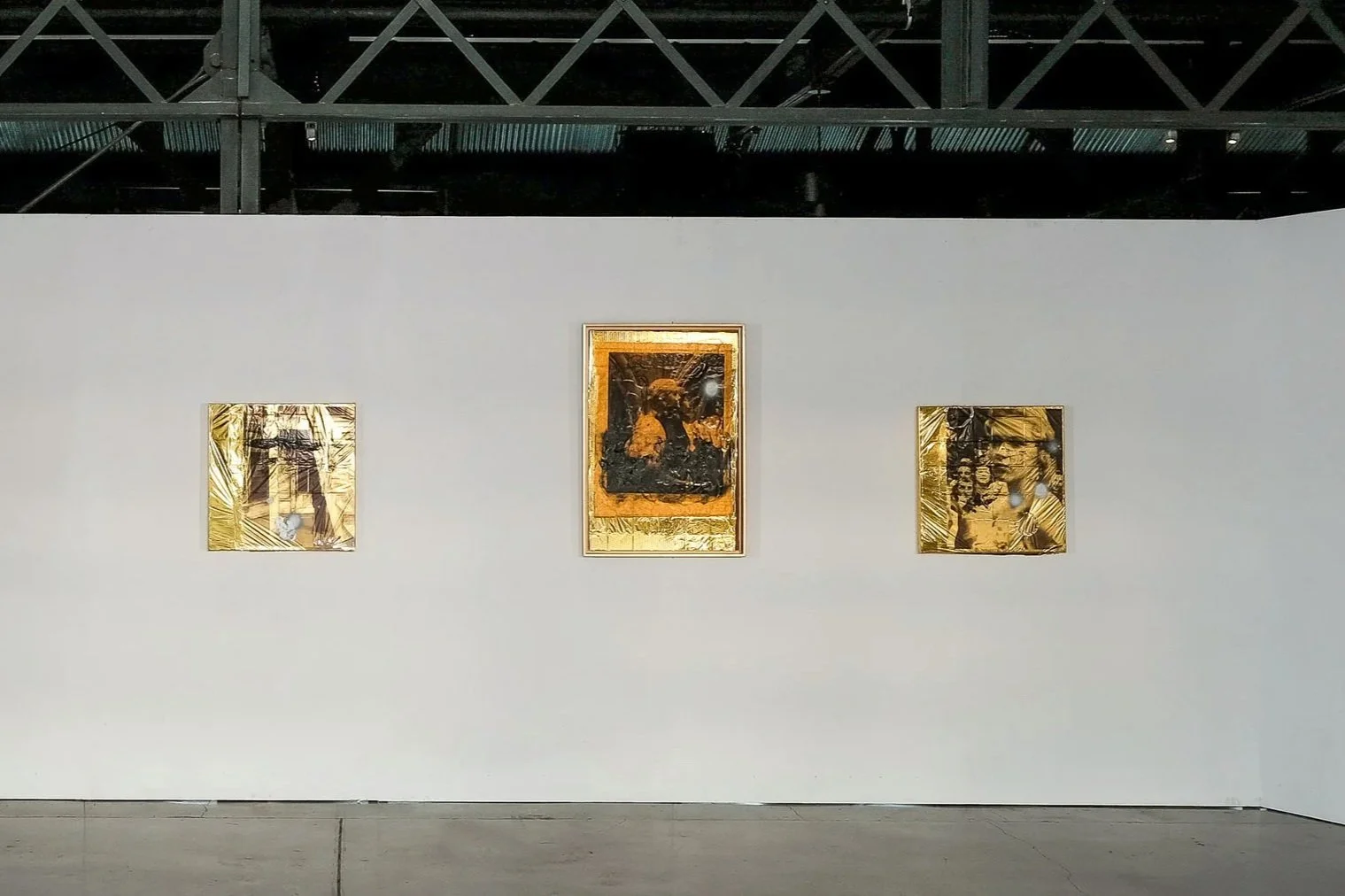
Exhibition view
Gold Rush
The Power of Gold
California. Colorado. North Carolina. Georgia. Alaska. The Dakota Territory. Pause to ask yourself what these have in common. Gold. The impetus for follies, booms, and busts, exploration, life, and death. What makes each of these unique, yet interconnected, is the way in which they stand not so much as signifiers of history, but as metaphors for the aspirational American dream. Fortunes made and fortunes lost. A landscape of transformation. Railroad tracks. Telegraph lines. Mining towns.
But these gold rushes, particularly California’s, also marked the largest mass migration of people in U.S. history. More than 300,000 migrants to what was essentially still a territory. From Hawaii, still independent. From Mexico, Chile, and Peru. From Africa. The Philippines. And, from China – in such numbers that by the end of the 1850s, they made up 20% of the population in the territories considered to be part of the mines.
The works in Kaeumle’s Gold Rush suite sit against this backdrop. Using gold leaf —but also reimagining photography, which was surging in both popularity and accessibility in the mid-19th century thanks to William Henry Fox Talbot’s invention of paper processes—Kaeumle transforms our understanding of both materiality and meaning. For rather than reflect upon historical icons or religious imagery, Kaeumle inserts the modern and the contemporary. Images of women seem drawn from the 1950s, and fragmentary representations of a person in a suit are as connected with Yves Klein and Marcel Duchamp as they are with the very idea of gold in any way.
What’s particularly subtle about these works is how Kaeumle uses rippled surfaces to suggest and connect with the passage of time, with motion, with the idea of change. Much like those 19th-century miners and prospectors separated from their families, were essentially on their own, Kaeumle's works imply movement. Both we and they are left, as they say, metaphorically flapping in the wind.
The very existence of these works—their construction, completion, and potential commodification—all tie into the history of the gold rush as much as they critique its other, more valuable yet less commented-upon construct: capitalism. For it wasn’t necessarily the prospectors hitting the mother lode who were coming home wealthy; it was the suppliers, the buyers, the shopkeepers, the saddlers, the farriers, the carpenters, the wheelwrights.
This disparity between expectations and actualities continues to define American culture. Whereas the 19th- and 20th-century gold rushes transformed America’s cultural construct, today there is little, if any, potential for such an instantaneous and impactful shift in American demographics or economics. California, a state that in 1850 had a population of just over 92,000, had by 1852—just two short years later—welcomed more than 20,000 Chinese migrants.
Now, back to the works. Imagine Kaeumle’s uses of gold leaf as contemporary interpretations of the idea of gold nuggets, much like Ye’s teased warning about someone whose intentions are opaque: “I ain’t sayin’ she’s a gold digger…” Unique, separate yet similar. Each piece of gold leaf on a surface is both a composition and a ground, marked by its slight variations yet consistent enough to convey its intent. And that photography! Kaeumle inverts its very materiality, confounding our familiarity with the medium, for we’re thinking silver but we’re seeing gold. That subtle doubling, easy to miss, is yet another metaphor for differentiations in substance and value.
Today, we define our rushes not by mining for precious metals but by attaining unicorn status, IPOs, and angel investors. Companies with Series B funding pack the pages of business publications, leaving stories of those still questing for gold to serialized shows on basic cable and infomercials spouting the value of holding precious metals in the face of certain doom. Sure, gold rushes are still crucial to pop culture—think Taylor Swift’s “Gold Rush,” Dan Fogelberg’s “The Power of Gold,” or Neil Young’s “After the Gold Rush”—but they’re simply metaphors, pictures of the past, much like the ephemera Kaeumle mines for inspiration. They’re modern icons of daily mundanity, images reflecting our dreams of some unimaginable versus the reality of being trapped in time, with our value writ clear yet thinly on our surface. Perhaps that is our modern gold rush. Nothing too deep. Kaeumle makes us wonder what the true value of gold—and life—is.
Jens Kaeumle
Kaeumle's art is a dialogue with history and philosophy, exploring themes of appearance, truth, Identity, and the human condition. American History, Youth and American Football serves as a central theme in Kaeumle's work. Kaeumle's portraits and art works highlight the duality of the American dream, capturing both the aspirations and the challenges it faces.
Text: Brett Levine
Artist
Download
Contact Press
Jens Kaeumle
The Startlet, 2021
Oil paint, linseed oil, gold foil, kraft paper, cardboard
24” x 24” inches (61 x 61cm)
© Jens Kaeumle
Photo: Robert Cooper
Courtesy of the artist
and House of Friends
Jens Kaeumle
Young Beauty, 2021
Oil paint, linseed oil, gold foil, kraft paper, cardboard
24" x 37” inches (61 x 94 cm)
© Jens Kaeumle
Photo: Robert Cooper
Courtesy of the artist
and House of Friends
Jens Kaeumle
Old man and stairs, 2021
Oil paint, linseed oil, gold foil, kraft paper, cardboard
24" x 24" inches (61 x 61 cm)
© Jens Kaeumle
Photo: Robert Cooper
Courtesy of the artist
and House of Friends
Jens Kaeumle
Headlight in the dark 1, 2020
Cardboard, gold foil, kraft paper, oil paint, linseed oil
22” x 18” inches (55.9 x 45.7 cm)
© Jens Kaeumle
Photo: Robert Cooper
Courtesy of the artist
and House of Friends
Jens Kaeumle
Exhibition view
© Jens Kaeumle
Photo: Robert Cooper
Courtesy of the artist
and House of Friends
Jens Kaeumle
Headlight in the dark 2, 2020
Cardboard, gold foil, kraft paper, oil paint, linseed oil
22” x 18” inches (55.9 x 45.7 cm)
© Jens Kaeumle
Photo: Robert Cooper
Courtesy of the artist
and House of Friends
Jens Kaeumle
Exhibition view
© Jens Kaeumle
Photo: Robert Cooper
Courtesy of the artist
and House of Friends